What's the Biggest Thing Affecting Marketing Teams? (Hint: It's Probably Not the Algorithm)
Every few weeks I hear the same thing.
"The algorithm has changed."
"AI is taking over."
"LinkedIn just isn't what it used to be."
"Google's impossible these days."
Now, while all of those things have some truth to them, I'd argue they're not the biggest challenge marketing teams are facing.
Not even close.
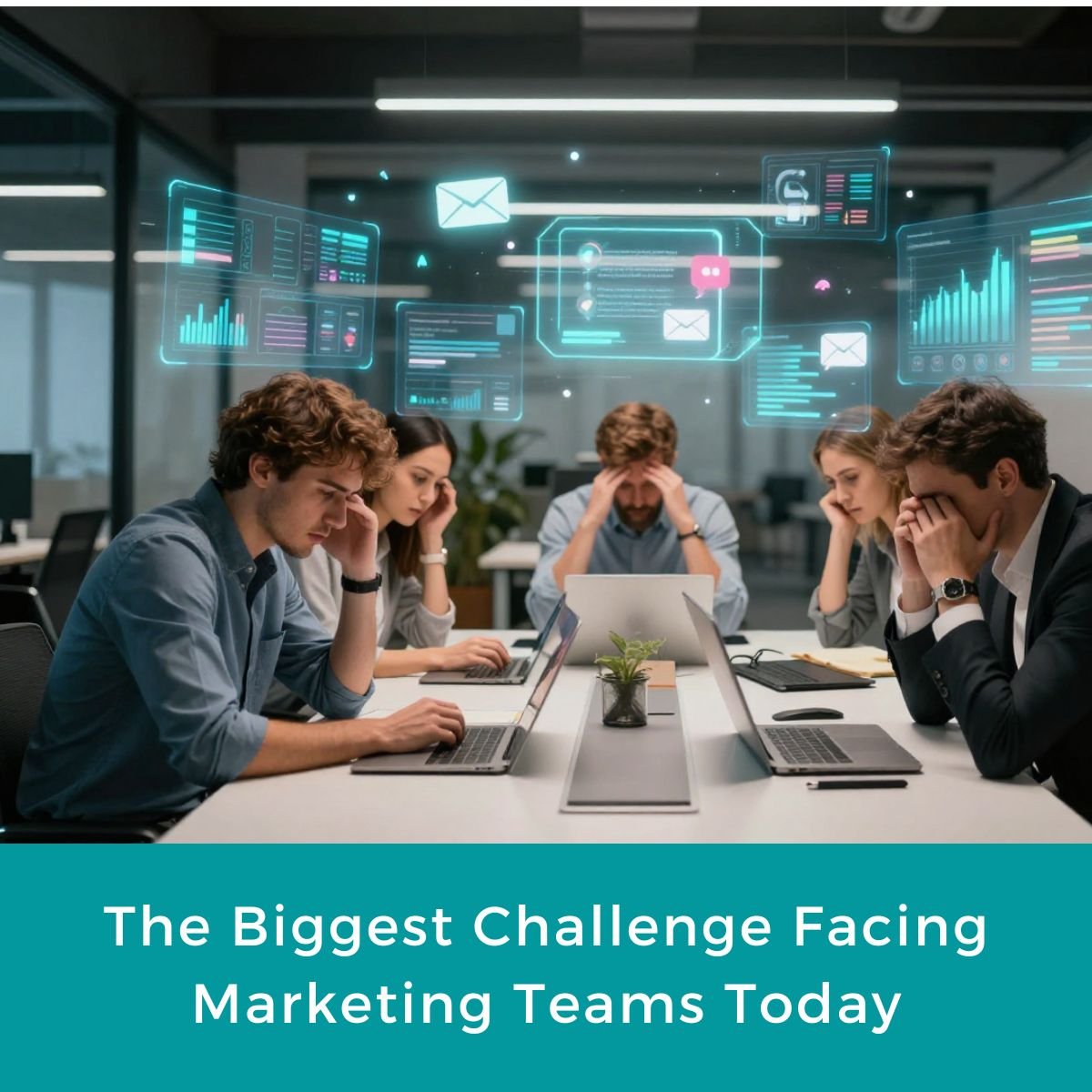
The biggest problem? Trying to do everything.
Marketing has never been more exciting... or more overwhelming.
We're expected to know SEO, PPC, Google Analytics, AI, email marketing, PR, social media, websites, video, design, automation, CRM systems, reporting, lead generation, branding and probably make a decent cup of tea while we're at it.
It's no wonder so many marketing teams are exhausted.
Whether you're a one-person marketing department or part of a larger team, there's a constant feeling that you're always behind. There are more channels, more tools and more opinions than ever before.
And yes... someone always thinks posting on TikTok will solve everything.
Being busy doesn't always mean being effective
One of the first things I notice when I work with businesses is just how much activity is going on.
Blogs are being written.
Social media is ticking along.
Emails are going out.
Google Ads are running.
The website gets updated.
Everyone is busy.
But when I ask one simple question...
"Which activity is bringing in the most profitable enquiries?"
...the room often goes very quiet.
Marketing shouldn't just keep people busy.
It should help businesses grow.
You don't always need another employee
Many businesses assume they need to recruit another marketer.
Sometimes they do.
But often they simply need someone who's been there before.
Someone who can look at everything with fresh eyes and quickly identify what's working, what's wasting money and where the biggest opportunities are.
That's where an experienced marketing consultant comes in.
Why experience matters
I've been doing this for over 20 years.
I've worked across manufacturing, construction, waste management, professional services, charities, education, engineering, property, healthcare and plenty more besides.
The channels change.
The technology changes.
AI changes almost weekly.
But the fundamentals of good marketing haven't changed.
Understanding your audience.
Creating clear messaging.
Choosing the right channels.
Measuring what matters.
And not chasing every shiny new thing that appears on LinkedIn.
Sometimes you just need someone to simplify it all
One of the things clients often tell me after we've worked together is...
"You've made marketing make sense again."
I love hearing that.
Because marketing shouldn't feel overwhelming.
It should feel achievable.
Sometimes that means creating a proper strategy.
Sometimes it's improving SEO.
Sometimes it's training an in-house team.
Sometimes it's sorting out Google Ads.
And sometimes it's simply giving people confidence that they're already doing many of the right things.
A consultant doesn't replace your team—they strengthen it
One of the biggest misconceptions is that bringing in a marketing consultant means someone is taking over.
That's never been how I work.
I'm there to support businesses and marketing teams, fill knowledge gaps, bring new ideas, challenge assumptions (nicely!), and help everyone get better results.
Think of me as an extra pair of experienced hands without the long-term salary commitment.
Or, if you prefer...
Marketing's equivalent of calling in a sat nav after spending 45 minutes insisting you definitely know where you're going.
We've all been there.
Final thoughts
The biggest challenge facing marketing teams today isn't AI.
It isn't social media.
It isn't Google's latest update.
It's information overload.
Knowing what to prioritise.
Having the confidence to ignore the noise.
And having enough time to focus on the things that genuinely make a difference.
That's exactly where an experienced marketing consultant can add real value.
Less guesswork.
More clarity.
Better results.
And hopefully a little less stress along the way.
